TOOTH EXTRACTION
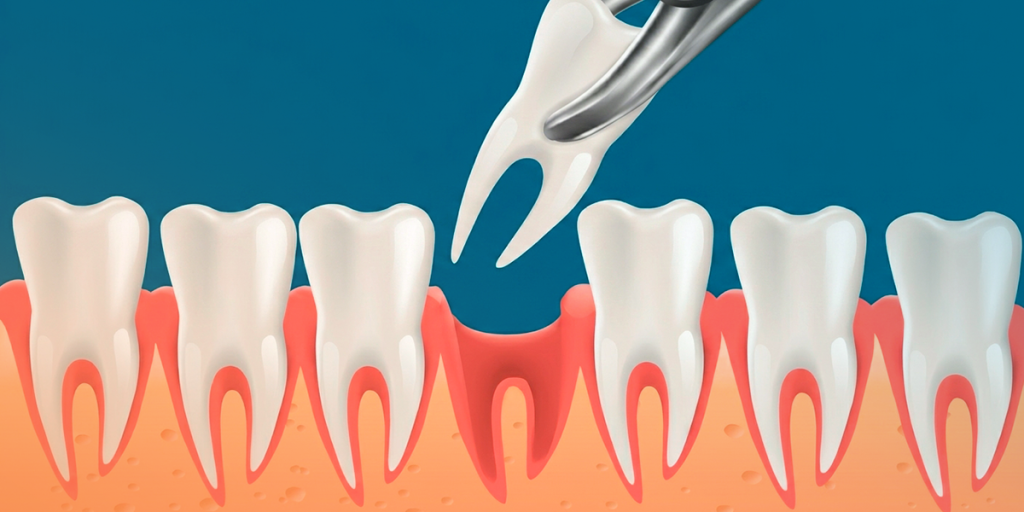
A tooth extraction is a dental procedure that removes a tooth from its socket in the jawbone. Extractions may be simple or surgical depending on the position of the tooth, the condition of the tooth structure, and whether the tooth is fully visible or impacted below the gum line.
Removing a tooth is not only about eliminating pain or infection. It is also an important step in protecting your bite, preventing further complications, and planning for long-term function and appearance. Because losing a tooth may affect chewing, jaw balance, bone structure, and the position of surrounding teeth, our team will discuss replacement options whenever appropriate. These may include dental implants, bone grafting, temporary restorations, or other implant-supported solutions.
Reasons for Tooth Extractions
Severe Tooth Decay: When decay reaches an advanced stage and the tooth can no longer be repaired with a filling, crown, or root canal treatment, extraction may be necessary to prevent the infection from spreading.
Failed Root Canal Treatment: In some cases, a previously treated tooth may continue to cause infection, pain, or structural problems. If the tooth cannot be restored, removal may be the best option.
Gum Disease or Bone Loss: Advanced periodontal disease can damage the bone and tissues that support the tooth. When a tooth becomes very loose or unstable, extraction may be recommended.
Broken or Severely Damaged Tooth: A tooth that is fractured, broken below the gum line, or damaged by trauma may not have enough healthy structure left to support a restoration.
Impacted Teeth: Impacted teeth, including wisdom teeth, may be trapped under the gums or partially erupted. These teeth may cause pain, infection, crowding, or damage to nearby teeth.
Overcrowding or Treatment Planning: In some cases, a tooth may need to be removed to create space or support a larger dental treatment plan.
Tooth Extraction Process
The extraction process begins with a complete dental evaluation. This may include digital X-rays or 3D imaging to assess the tooth, roots, surrounding bone, nerves, and nearby structures. Before treatment, our team will review your medical history, current medications, symptoms, and any concerns you may have. If there is an active infection, antibiotics or pain relief may be recommended before or after the procedure depending on your case.
During the extraction, local anesthesia is used to numb the area and help make the procedure as comfortable as possible. For simple extractions, the tooth is gently loosened and removed from the socket. For more complex cases, a surgical approach may be required to safely remove the tooth. After the tooth is removed, the area is cleaned and protected. If needed, bone grafting may be recommended to help preserve the jawbone and prepare the area for a future dental implant.
Planning for Tooth Replacement
At Florida Dental Implants DDS, tooth extraction is often planned with the future restoration in mind. When a tooth is removed, the jawbone can begin to shrink over time if it is not properly supported. For this reason, our team may discuss options such as bone grafting, dental implants, temporary crowns, or other replacement solutions.
In some cases, an implant may be placed soon after the extraction, depending on the condition of the bone and gums. In other cases, healing or grafting may be needed first to create a stronger foundation. Our goal is to help you move from tooth removal to tooth replacement with a clear, personalized treatment plan designed for long-term comfort, function, and confidence.